

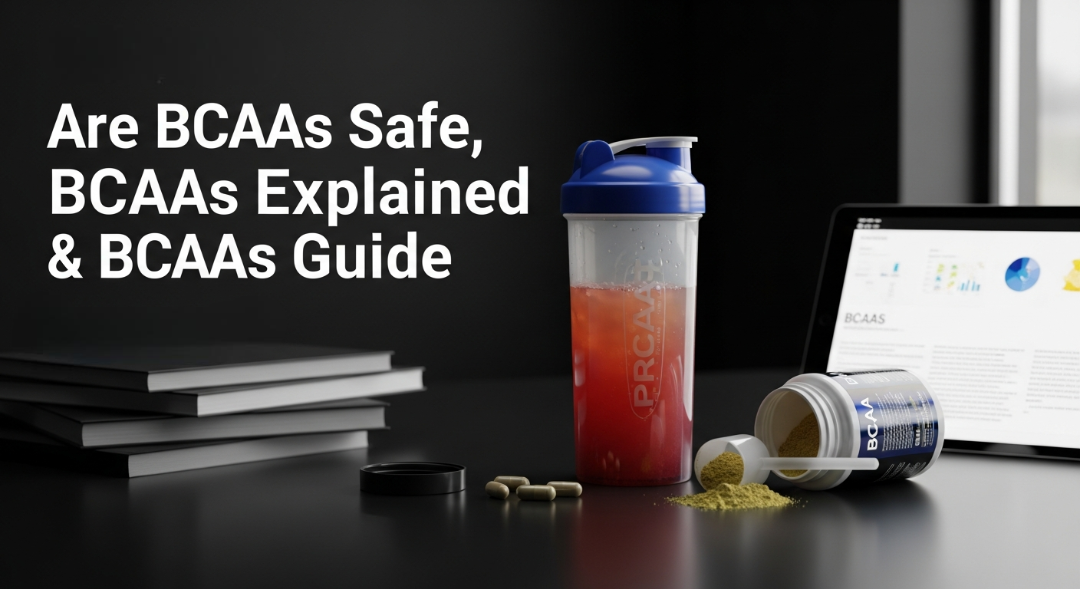
BCAA’s are commonly used fitness supplement’s, and have established themselves as integral to many workouts and recovery programs all over the world. BCAA’s are known to provide support for an individual’s muscle performance and support an individual’s muscle health; therefore, the question is asked, are BCAA’s safe to take daily? The three BCAA’s (Branched Chain Amino Acids), leucine, isoleucine and valine, are essential amino acids that are found naturally in protein sources, and when used as supplements will provide targeted support to assist with muscle recovery, energy production, and decreased muscle fatigue after strenuous workouts.
One reason BCAAs are safe to use by the majority of individuals, is because of their ability to be easily absorbed and to be gentle to the digestive system when used as directed. This fact has made them a popular and safe choice for both beginners and experienced fitness enthusiasts.
By supporting muscle recovery and preserving lean body mass, as well as, supporting increased endurance and recovery from workouts, BCAA’s are effective supplements to include in a comprehensive balanced fitness program and can be made into safe and affordable companion products.
What Are BCAAs Safe to Consume & What Are BCAAs Used For?
BCAAs are consumed by many individuals at all levels of fitness and are considered safe when taken properly. The BCAAs consist of three simple, highly studied amino acids that aid in muscle recovery, energy level, and overall muscle health. Understanding what the BCAAs consist of, how they operate, and what athletes use them for can answer the question: "Are BCAAs safe?"
Are BCAAs Safe Amino Acids & What Are BCAAs Made Of ?
The BCAAs consist of three essential amino acids: leucine (Leu), isoleucine (Ile), and valine (Val).These three amino acids are found naturally in everyday foods that are high in protein, like cow's milk, egg whites, red meat, poultry, fish, soybeans, and beans, so you are probably familiar with these nutrients. They are safe for almost everyone because they are naturally occurring.
- Since the human body cannot create these three amino acids on its own, they have to be
- supplied through food and/or supplements to maintain normal levels in the bloodstream.
- The fact that BCAAs have a natural source is one of the reasons they are safe to take because your body's cells are used to receiving them from your diet every day.
Contents of BCAAs
- Leucine: Promoting Muscle Repair & Growth
- Isoleucine: Aiding in Energy Production and Endurance
- Valine: Assisting in Recovery from Muscle Fatigue

Are BCAAs Safe Supplements & How Do BCAAs Work?
BCAAs are considered safe to supplement with if taken at the suggested dosage.
- Unlike most dietary supplements that require metabolic breakdown by the liver, BCAAs can be taken up by muscle cells directly and therefore do not place any additional stress on the digestive system and can be absorbed more quickly and efficiently.
- BCAAs are used to provide an immediate source of amino acids for muscles during exercise when recovering from exercise by promoting healing, decreasing muscle damage, and improving recovery time through the support of a healthy muscle environment after the workout has finished.
- This is the reason that BCAAs are safe for individuals to use regardless of experience or seasonality as their benefits are quickly felt and able to be seen in every demographic.
Mechanisms of Action of BCAAs:
1. Rapidly enter the muscles
2. Decrease the effects of muscle damage (DOMS)
3. Improve recovery
4. Help preserve lean muscle during weight loss/deficits
Are BCAAs Safe for Fitness & Why Athletes Use BCAAs
BCAAs are very popular in both fitness and sports nutrition due to the fact that they provide specific muscle-focused supplementation with minimal filler ingredients.
- BCAAs provide a means for athletes to train longer, recover faster, and feel less sore between training sessions.
- Athletes can use BCAAs to maintain their muscle mass through periods of heavy training and/or weight loss.
- BCAAs contain amino acids (no stimulants, no hormones), therefore BCAAs are not habit-forming and will not result in hormonal imbalances.
Reasons athletes trust BCAAs:
1. Increased endurance during a workout session
2. Decreased post-exercise muscle soreness (DOMS)
3. Faster recovery from exercise
4. Protection of muscle and lean mass during a highly trained state.

Are BCAAs Safe According to Science & Are BCAAs Safe Long-Term?
Scientific studies of branched-chain amino acids or (BCAAs) have been ongoing for decades and have shown that BCAAs have been found to be beneficial for athletes, people who exercise regularly, and anyone who would like to be more active. When used appropriately, BCAAs are always reported safe, very well tolerated, and an effective way to supplement your diet. This means that a good understanding of what science has to say, how much is taken every day, and how BCAAs are similar and differ from other types of dietary supplements will help one make the determination are BCAAs safe for continual and/or long-term use?
Are BCAAs Safe Based on Scientific Studies on BCAAs
The majority of scientific research shows that BCAAs are safe to consume in accordance with the recommended amounts.
- Published research supports that the consumption of BCAAs assists with recovery, reduces muscle soreness, and enhances overall performance when it comes to exercise, without causing harm to healthy people.
- Because BCAAs are also found in food sources that have a high protein content, such as eggs, dairy products, and legumes, taking supplemental BCAAs allows for a concentrated and focused amount of BCAAs to be taken.
- Most clinical studies indicate that people experience no negative side effects when BCAAs are taken in a responsible manner, and therefore the research studies would support the idea that the status of BCAAs being safe is confirmed by the literature.
Scientific Evidence of BCAAs Being Safe:
- Safe to take for Healthy Adult Males and Females.
- No Toxicity at Recommended Doses
- Reasonably well tolerated by Males/Females
Are BCAAs Safe When Used Daily & Are BCAAs Safe in Normal Doses
- When taken in the standard dosage (5-15 grams), BCAAs are safe for most healthy adults the majority of the time.
- Because of the importance of muscle growth, BCAAs support muscle recovery by providing a steady supply of essential amino acids (EAAs) to the muscles, as well as reducing muscle fatigue during an exercise bout.
While there may be risks associated with BCAAs
- when consumed in excessive amounts or without adequate amounts of fluids and other foods such as carbohydrates, proteins, sugars would NOT BE PROBLEMATIC for most healthy adults.
Are BCAAs Safe Compared to Other Supplements & BCAAs Safety Evidence
- BCAAs are considered to have one of the best safety records when compared to other performance enhancing supplements.
- Unlike several other types of pre-workout or fat burning products, which contain stimulants or hormones, BCAAs contain neither. They do not negatively impact the nervous system or cause any adverse reactions.
- While other types of products can potentially place too much stress on the heart and digestive systems, BCAAs support the body's natural process of using amino acids.
- Thus, they are a better option for beginner athletes, users of long duration, and those with an increased sensitivity to highly-stimulant based products.

Are BCAAs Safe for Everyone & Who Should Avoid BCAAs?
BCAAs are often utilized by people of various fitness levels and ages, and for the vast majority of individuals, BCAAs are deemed safe when consumed adequately; however, there are variations, i.e. certain people may have greater or lesser safety issues due to their lifestyle, age, health issues,
or whether they consume them correctly. Knowing what BCAA users should not use safely or at all and knowing how to use BCAAs responsibly can contribute to the proper use of BCAAs.
Are BCAAs Safe for Athletes, Beginners & Active People
- Technically, BCAAs are safe for everyone who's physically active or has exercised recently; however, most people find that they have a positive effect on their bodies in terms of decreasing muscle breakdown and speeding up recovery.
- Beginning exercisers can also benefit from BCAAs in that they will help them lessen the soreness and fatigue they experience when beginning an exercise program.
- People who engage in activity at least two or three times a week, such as people who walk regularly, practice yoga, or do light exercise (e.g. running, cycling) can take BCAAs to help keep their muscles healthy and recover daily.
What Makes BCAAs So Effective for Non-Exercisers?
- Speed up recovery from strenuous activity (e.g. strength training, long-distance running) and
- Minimize exercise-induced muscle fatigue.
- Support the building of lean muscle mass; and
- Are easily digested and absorbed quickly into the body.
Are BCAAs Safe for Women, Elderly & BCAAs Usage
When consumed in suggested amounts, BCAAs can be safely taken by women.
- BCAAs allow women to maintain their lean body composition as well as improve energy and recovery without gaining any unnecessary muscle bulk, which may lead to an imbalance in hormones.
- BCAAs will also allow older adults to retain muscle mass and increase their strength and provide mobility when they engage in light physical activity.
- With natural muscle degeneration occurring as we age, using BCAAs can be advantageous if used correctly and consistently.

Are BCAAs Safe for Certain Medical Conditions & Restrictions
Although general consensus is that BCAA consumption is relatively safe for most healthy individuals, there are specific populations of individuals who may want to limit their intake of BCAAs.
- Anyone who has been diagnosed with kidney disease, liver disease or a metabolic disorder should always consult their physician before starting any new dietary supplement including BCAAs.
- Additionally, given the lack of research on the safety of using BCAAs during pregnancy and lactation, pregnant and nursing women should also talk to their doctors before taking any supplements, including BCAAs
- Furthermore, anyone who has an adverse reaction to an artificial sweetener, color or flavoring should only consider purchasing a clean label or unflavored BCAA product.
Individuals That Should Avoid or Limit BCAA Use:
- Individuals with kidney or liver disease.
- Individuals with disorders of amino acid metabolism.
- Women who are pregnant or nursing.
- Individuals with pre-existing sensitivities to supplements.
Are BCAAs Safe Dosage-Wise & How to Take BCAAs Safely
BCAA supplements are a common source of nutrition for people just starting out and for athletes, and when used correctly, BCAAs are believed to be safe and beneficial.
To use BCAAs to the best of their ability to help your body recover from working out and improve the performance of your muscles, you must know how much BCAAs to take each day, when to take them, and in what way. You will have confidence in your ability to use BCAAs safely to provide the benefits of using them.
Are BCAAs Safe at Recommended Dosages & BCAAs Intake
The most common question about BCAA supplements is, "Are BCAAs safe to take every day?"
- The answer is yes for most adults who are healthy and consume BCAAs in recommended amounts.
- Generally, daily consumption of between 5 g and 15 g of BCAA per day is a safe and effective amount to use, implying that a person can consume more or less depending on their level of activity and intensity of training.
- BCAAs in this range can aid in recovery of muscles after exercise, reduce feelings of fatigue during training, and can help to prevent muscle breakdown during prolonged exercise without adding any excess strain on the body.
Taking BCAAs in excess of this amount typically does not provide any added benefit and may result in mild discomfort in your stomach. Understanding how to use BCAAs properly on an ongoing basis requires balance and consistency to ensure safety

Are BCAAs Safe Timing-Wise & Best Time to Take BCAAs
BCAAs must be taken/BCAA usage has to be timed properly. They are considered fast-acting/fast absorbing amino acids; therefore, the absorption rate is influenced by when you ingested/took them.
BCAAs can be used entirely safely while achieving both effective & safe, given:
- Before workout to provide energy & protect muscle during workout
- During workout to reduce fatigue & maintain/keep going with your endurance abilities
- After workout to reduce muscle soreness & enhance/rebuild muscle recovery process
The “best” time to take BCAAs will depend largely on your own personal fitness goals. In this manner, BCAAs will prove very helpful in working along with your body’s natural recovery system.
Are BCAAs Safe Powder vs Capsules & BCAAs Forms
The primary forms of BCAAs currently available are powders & capsules, both of which are considered safe ways to use BCAAs, provided you use proper methods to determine how/why to use them.
- The difference between powders & capsules comes down to convenience, speed of absorption, & methods of controlling the amount (i.e., dosage).
- BCAA powders are absorbed at a much quicker rate than BCAA capsules &/or may be mixed with water to create a simple drink & are good to use during workouts.
BCAA capsules are much more convenient & have no taste, and are easy to carry.
- Despite these two forms being BCAAs, they will always remain BCAAs and are safe if you follow dosage recommendations
- based upon qualities of the product, including the type of ingredients used and/or what additional ingredients (if any) have been added to the product that may have been added as additives (such as sweeteners)
Are BCAAs Safe from Food Sources & Do You Need Supplements?
Foods naturally contain BCAAs and supplements provide BCAAs to help you achieve your goals. When choosing between the two, it is important to know where to find BCAAs in the foods you eat, when you need to use supplements, and what type of safety exists for each option when making decisions regarding your health and fitness.
Are BCAAs Safe from Natural Foods & Food Sources of BCAAs
BCAA consumption from natural food sources is safe. As essential amino acids, BCAAs are found in high-protein foods, including eggs, dairy products, chicken breast, turkey breast, salmon, and plant foods, like legumes, soybeans, and nuts. These high-protein sources provide all the BCAAs needed for muscle recovery, energy production, and overall wellness, while posing no risk of toxicity.
Many food sources contain BCAAs. Examples of food sources that contain them are:
- Eggs and Dairy Products
- Lean Poultry (Chicken & Turkey)
- Fish
- Legumes & Soybeans
- Nuts & Seeds
The balanced nutrition provided by BCAA-rich foods makes them safe for consumption and all age groups.
Are BCAAs Safe Without Supplements & Diet vs Supplement
BCAA supplements aren't needed by most people because they can get all the branched-chain amino acids in optimal amounts from their standard diets.
- As long as you consume adequate daily dietary protein sources regularly, you'll receive continual dietary supplies of BCAA from diet to supplement.
- \However, some participants of high-volume or very vigourous strength training programs (especially) or those consuming caloric-deficit diets (who require additional protein) will find themselves unable to meet the protein minimum through food alone.
- Therefore, they may wish to consider supplementing as an alternative to food – especially if they require the protein for recovery.



 +91 63528 07487

 225, Orchid Plaza, Sama-Savli Rd,
behind mc donald's, Vemali,
Vadodara, Gujarat, India 390008
225, Orchid Plaza, Sama-Savli Rd,
behind mc donald's, Vemali,
Vadodara, Gujarat, India 390008