

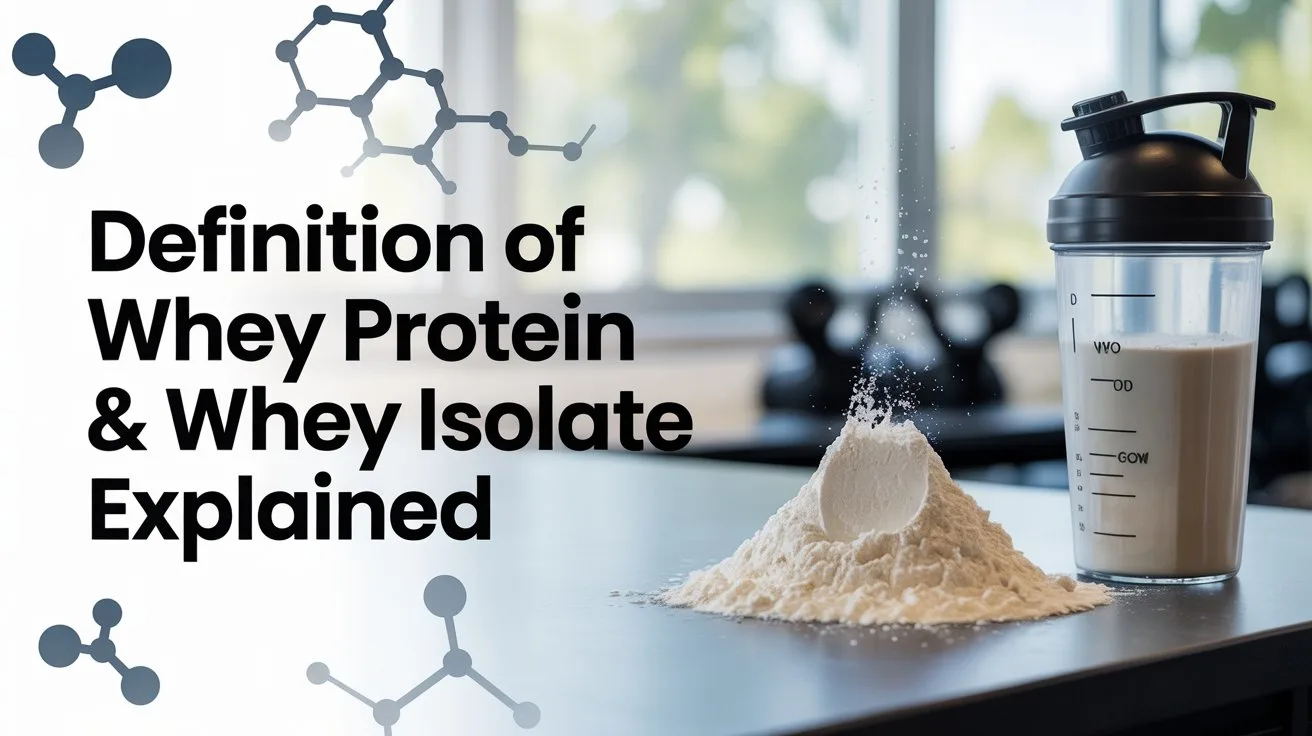
Whey protein is arguably the most common and researched supplement in the fitness and health industry. To define what whey protein is, it comes from milk while making cheese, and whey protein is essentially the liquid, or whey, that is separated when curds are created. Whey protein, is whey that is processed to then be dried and made into a powder substance. We consider whey protein to be a complete protein, meaning it has all nine essential amino acids important for muscle growth, repair, and overall health.
Whey protein occurs in several forms, with whey isolate definition being that it has gone through separate processing to take out most of the fat and lactose. Whey protein isolate has more protein content because a lot of the fat and lactose is extracted—usually by weight it is equal to over 90% protein. For this reason, whey protein isolate meaning is always referred to having faster absorption, lower calories, and less if not no lactose, making it a good source of protein for many people.
Understanding the isolate protein meaning compared to different forms helps to clarify the definition. Whey concentrate protein is about 70 – 80% protein, plus fats and carbs. In this regard, whey isolate is more refined and is a great option for athletes or people seeking an elevated protein intake without much added calories or sugar.
Whey protein and its varieties (which include whey isolate) all fall in the essential ingredient category for muscle gain, weight management, and workout recovery and understanding the meaning of whey protein will help you understand and make the best choices possible when it comes to your nutrition and fitness goals.
Understanding the Definition of Whey Protein

Whey protein, a complete, high-quality protein naturally present in milk, is a co-product of the cheesemaking process and is fast digesting with a rich amino acid profile and flexibility to support numerous health targets. It is important to clarify what whey protein is so that people can make the best food decisions based on nutritional needs, fitness goals, and dietary preferences or restrictions. Whey protein is more than a supplement — it is a functional food ingredient that is incorporated into shakes, bars, baked goods, and smoothies. With its increased acceptance in wellness and sports nutrition, it is necessary to understand types, benefits, and what whey protein can offer over other protein forms.
What Is Whey Protein?
Whey protein is produced from the liquid portion of milk that separates during the cheese-making process. This liquid is then processed into concentrated protein and contains all nine essential amino acids.
Key Points:
- Complete Protein: Contains all essential amino acids.
- Fast Digestion: Great option for post-workout recovery and muscle protein synthesis.
- Versatility: Can be added to shakes, meals or baked goods.
- Helps Muscles Recover: A popular protein option for athletes and bodybuilders.
Whey protein is available in a few forms—concentrate, isolate and hydrolysate. Each differ by processing methods and nutritional content.
Nutritional Composition of Whey Protein
Knowing what whey protein is also means understanding whey protein nutrition profile. Whey protein offers a supply of protein that is primarily made up of branched-chain amino acids (BCAAs) with a special emphasis on leucine, a critical amino acid for muscle synthesis.
Typical nutrients in 1 serving (roughly 30 grams) are:
- Protein: 20-27 grams(depending on type)
- Carbohydrates: 1-5 grams
- Fats: 1-3 grams
- Calories: Roughly between 120-140 kcal
- Calcium: A contributor to bone health
- Lactose: In whey concentrate, not in whey isolate (very minimal)
Various forms of whey protein have a different ratio of these nutrients and therefore will be suitable for achieving different types of goals.
Why the Definition of Whey Protein Matters
Knowing what whey protein is all about will better prepare you to choose the correct form you should be taking for your health and fitness goals. Many people confuse general whey with whey isolate, which is more refined and tailored more towards people who are lactose intolerant.
Point of understanding whey protein:
- Helps with Goal Setting: Whether it's weight loss, muscle gains, or just health.
- Helps you make a choice: Is it isolate, concentrate, or hydrolysate."
- Helps avoid digestive issues: Especially with lactose intolerance."
- Helps with recovery: From intense/long-duration physical activity."
When you are clear about the whey isolate definition, the isolate protein meaning, and the whey isolate meaning, you can guarantee you are getting quality protein and meeting your dietary requirements exactly.
Whey Isolate Definition and Key Benefits

Whey protein isolate is the purest form of whey protein. Whey isolate is micronized or processed further to remove the vast majority of fat and lactose. Isolate is typically 90%+ protein by weight and knowing the whey isolate definition will help them select the right protein that could reach their nutrition and performance goals. Isolate is notably a favorable protein supplement for athletes, fitness enthusiasts, and individuals with lactose intolerance.
Some of the main benefits of whey protein isolate:
- Higher Protein Density: Whey isolate contains 90%+ protein, so when looking for protein supplements it is one of the most concentrated forms.
- Low in Lactose and Fat: Great for individuals sensitive to lactose or looking to follow a low-fat diet.
- Rapid Absorption Rate: Whey isolate is the best option for recovery to help repair muscle and tissue damage.
- Facilitates Lean Muscle Gains: Chosen most by individuals hoping to gain muscle mass, while minimizing fat gains.
Whey Isolate Definition Explained
The definition of whey isolate is a whey protein product that has been microfiltered or ion exchanged to remove excess carbs, fats, and lactose. This makes it a much cleaner, purer protein source.
Key attributes:
- Purity: Contains less in the way of additives and fillers.
- Digestibility: It is easier on your stomach, especially if you have a mild form of lactose intolerance.
- Concentration: You will get more protein per scoop compared to whey concentrate.
- Common usage: Bodybuilders, athletes and those who need to control weight.
How Whey Isolate Differs From Other Types
When looking at the definition of whey protein, it is important to compare the definition of other forms of whey protein to see where whey isolate fits in the bigger picture.
Whey isolate vs. types of whey protein:
- Whey Concentrate: It has about 70–80% protein, with more lactose and fat.
- Hydrolyzed Whey: It has been pre-digested so you can absorb it quicker, but it often costs more.
- Whey Isolate: It is in between a concentrate and a hydrolysate that is more pure and little in the way of fat, lactose and carbs, all in an affordable price point.
Why use whey isolate:
- You are lactose intolerant.
- You need the most protein per serving.
- You are on caloric restriction or on a cutting diet.
Whey Isolate Meaning in Fitness
In other words, whey isolate meaning in the fitness and nutrition sections isn't limited to being a protein source alone; it's seen as a performance enhancement strategy for muscle gain, fat loss, and quick recovery.
Fitness applications of whey isolate:
- Post-Workout Fuel: It will absorb quickly enough to be perfect right after a workout.
- Lean Muscle Building: It adds lean muscle with no extra calories.
- Diet Compliance: It can be used with multi-day high protein low carb eating.
- Versatility: It can be used in smoothies, shakes or baked into recipes.
Knowing the isolate protein meaning can help fitness minded individuals structure their supplementation to be in line with the results produced by their training. Whether you are a new gym goer or an elite athlete, whey isolate is a great protein option that meets the standards of today's fitness culture.
Isolate Protein Meaning: Broader Context and Applications

The meaning of isolate protein refers to any protein that has been purified to significantly increase its protein concentration, usually around 90% or higher. While whey protein isolate is limited to dairy, the idea of isolate can pertain to many protein sources including plant-based proteins like soy or pea. Isolate proteins are heavily utilized in fitness, clinical nutrition, and wellness, because of its high efficiency, digestibility, and low carbohydrate and fat content.
Isolate Protein Meaning Across Sources
Knowing the isolate protein meaning entails discovering how this type of protein shows up from different sources - not always just dairy. While whey isolate definition refers to animal protein, plant-based isolates come into the conversation.
Typical protein isolates include:
- Whey Isolate: Coming from milk, it absorbs very quickly and is very high in essential amino acids.
- Soy Isolate: A plant-based and complete protein, also suitable for vegetarians and vegans.
- Pea Isolate: Considered hypoallergenic, good digests, and is naturally high in branched-chain amino acids (BCAAs).
- Rice Isolate: Lighter extremely and not taxing on digestion, rice isolates are usually mixed with other proteins to complete the amino profile.
Context varies based on dietary usages:
- Whey Isolate: For performance and recovery/objectives.
- Plant Isolates: Suitable for vegan or allergen-free diets.
Whey Isolate vs Plant Protein Isolates
When comparing whey isolate vs plant protein isolates, both have unique advantages depending on the user's goals and dietary preferences. Knowing the whey isolate meaning can help fitness enthusiasts and health-conscious individuals decide the best protein for their regimen.
Key differences:
- Choose Whey Isolate: If you're focused on muscle gain, recovery, or cutting fat.
- Choose Plant Isolates: If you're vegan or have lactose/dairy intolerance.
Choosing the Right Protein Isolate
Picking the right isolate begins with your objectives, nutritional needs, and tolerance. While you may know the whey isolate definition, or perhaps you are seeking to understand isolate protein meaning, making the right selection should involve a reasonable balance of nutrition with your lifestyle.
How to choose:
- For Muscle Building & Recovery: Whey isolate is preferable due to its quick absorption and complete amino acid profile.
- For a Vegan or Dairy-Free Diet: You would select soy, pea, or rice isolates.
- For a sensitive stomach: Pea or rice isolates are typically more gentle.
- For Weight Loss: All isolates are suitable based on high protein and low calories—just make sure they don't contain added sugars or fillers.
Tips to assess isolate proteins:
- Seek for third-party testing.
- Go for items with minimum add-ins.
- Read the nutrition label attentively for the percentage of protein and the source.
With a better understanding of whey protein definition or isolate protein meaning, you are on the path to making informed choices for your fitness and nutrition journey.
Whey Isolate Meaning in Diet and Daily Use

Comprehending whey isolate meaning in relation to food & everyday nutrition, and how this excellent protein can add to a balanced diet, is helpful to learn about. Whey isolate is free from the added fat or lactose found in whole whey and whey concentrate but is one of the purest forms of whey, with a rapid absorption time. As a highly pure form, it can easily be used on a daily basis and incorporated into various active lifestyles.
Often when people talk about whey protein, they are applying the definition of whey protein, which is different than whey isolate. Whey protein is derived from milk, like whey isolate, but whey isolate undergoes various filtration processes which allow the removal of excess carbohydrates and fats, making it a purer form of protein and better suited for individuals looking to be athletes, or weight-conscious, or potentially lactose sensitive.
Daily Use of Whey Isolate
Taking whey isolate every day provides you with dependable protein support for muscle maintenance, energy, and recovery. Additionally, the fast digestion of whey isolate is optimal post-workout or as a protein boost in between meals.
Here's are some benefits of using whey isolate daily:
- Provides fast digestible essential amino acids to support lean muscle development.
- Very low in calories, which helps with weight management.
- Convenient source of protein for busy schedules or low protein diets.
- Very low allergenic properties due to no lactose and minimal fat.
General tip, start with 20-25g of whey isolate each day, ideally post-workout or in a snack when protein content is primary
Incorporating Whey Isolate in Meals
Using whey isolate in meals does not solely need to be through shakes. Even though it's in powder form, it has a neutral taste which can be incorporated into many meal preparations "for the flavor" or, with slight alteration "impact texture" in flavor and thickness.
Simple ways to introduce whey isolate:
- Combine with oatmeal or porridge, to add protein content to your breakfast.
- Stir into soup or sauces for added protein value.
- Combine into baked items like bread or muffins as an ingredient while baking.
- Mix with yogurt or nut butters, to make excellent pre- or post-workout snacks.
When discussing the isolate protein meaning, keep in mind all the versatility whey isolate offers: it can really be an ingredient instead of just a supplement.
Whey Protein Recipes to Try
If you've just started utilizing whey isolate, one way to try it for the first time is to prepare some tasty whey protein recipes which target your diet. Doing this is a great way to experience the whey isolate definition - you'll be helping your body and getting a tasty meal out of it.
Try these recipe ideas:
- Whey Smoothie: Blend whey isolate with banana, spinach, and almond milk to make a refreshing post workout whey protein shake.
- Protein Pancakes: Mix the isolate in oats, eggs, and baking powder to create an eatable breakfast option as well.
- Whey Ice Cream: Blend whey isolate, Greek yogurt, and berries, freeze, and you'll have a whey protein enriched low sugar treat.
- Protein Bites: Mix protein isolate, peanut butter,
With these ideas in mind, it won't only educate you on the definition of whey protein, but will help you learn how to enjoy the benefits of using whey protein every day through different flexible and enjoyable food options.
FAQs
Q1 What is whey protein and why is its definition important?
The definition of whey protein helps understand its role as a high-quality, complete protein essential for muscle repair and nutrition.
Q2 What does whey isolate meaning mean?
The whey isolate meaning refers to a purer form of whey protein with higher protein content and minimal fat or lactose.
Q3 What's the difference between isolate protein meaning and concentrate?
The isolate protein meaning involves more filtration and purity, while concentrate has slightly lower protein and more carbs and fats.
Q4 Is whey isolate meaning worth the extra cost?
Yes, the whey isolate meaning justifies its price for those seeking fast absorption, low lactose, and premium muscle recovery.
Q5 Can I use whey isolate if I'm lactose intolerant?
Absolutely, thanks to its minimal lactose content, whey isolate definition makes it suitable for most lactose-intolerant individuals.
Q6 Is whey protein safe for long-term daily use?
Yes, based on the definition of whey protein, it's safe for daily use when consumed within dietary guidelines.
Conclusion: Embrace Whey Protein With Confidence
Knowing the definition of whey protein gives you the knowledge and power to take control of your nutrition and health. Whey protein is a complete, high quality protein derived from milk, with excellent bioavailability and amino acid profile. Whether you are new to supplements or have been an athletic for years, that include whey in your diet will help you support muscle development, weight management, and health improvement.


 +91 63528 07487

 225, Orchid Plaza, Sama-Savli Rd,
behind mc donald's, Vemali,
Vadodara, Gujarat, India 390008
225, Orchid Plaza, Sama-Savli Rd,
behind mc donald's, Vemali,
Vadodara, Gujarat, India 390008