

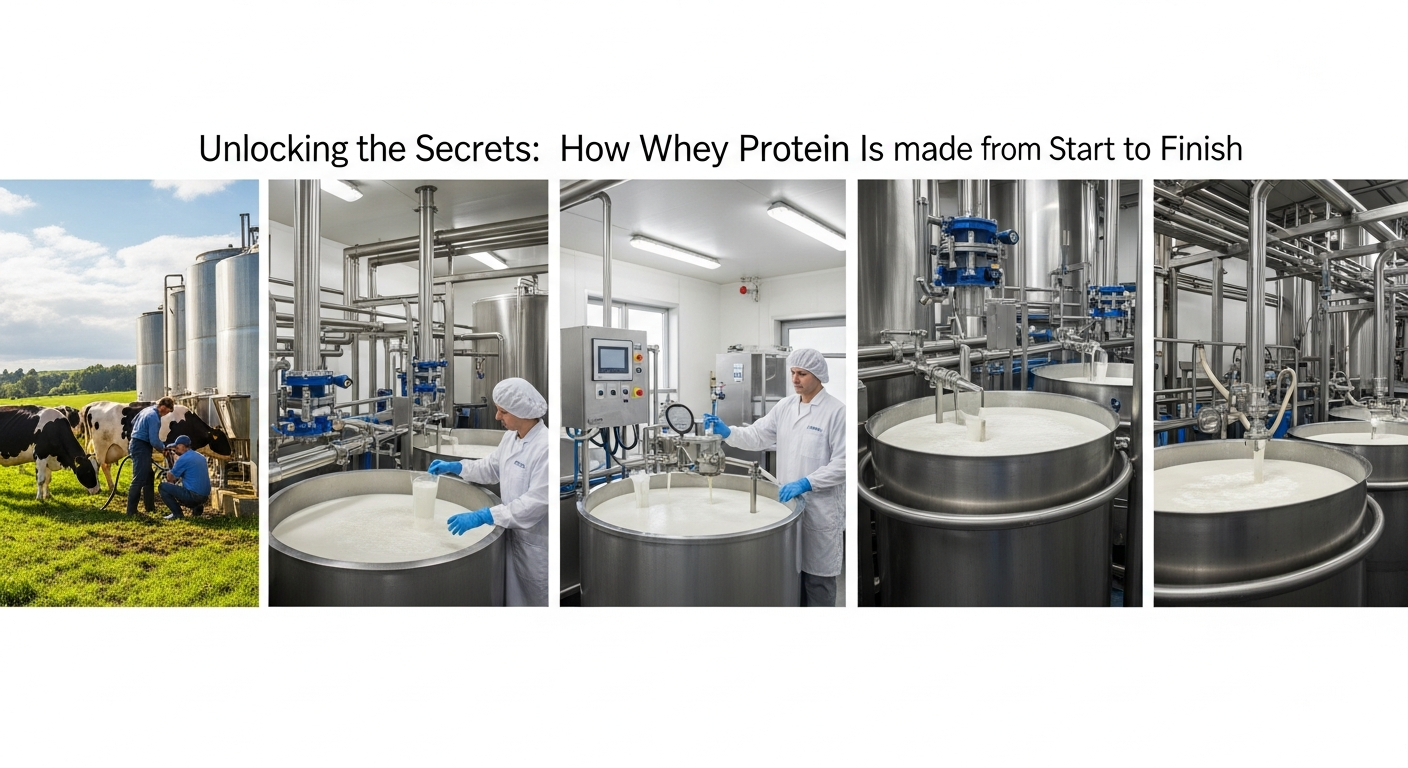
For a long time, fitness enthusiasts and health-conscious consumers have looked to whey protein as a trusted source of superior nutrition and the easiest way to fuel their fitness goals. Among the key components of whey protein are protein, amino acids, calcium, and bioactive peptides. Whey is easily absorbed by the body, making it an ideal form of protein for recovery, strength-building, and total daily nutrition. The many steps involved in turning liquid whey extracted from milk into powder, from beginning to end, are loaded with science, purity, and nutrition.
The Basics: What Is Whey Protein?
Whey protein is an excellent source of nutrition that offers multiple benefits for anyone who is looking for a safe, high-quality protein source for fast digestion and Easy on the stomach and beneficial to all fitness levels alike. From Whey Concentrate to Isolate and Hydrolyzed Whey, each scoop provides strength and recovery for all users!
Whey Protein Definition and Origins
Whey protein originates from the curds of milk WHEN producing cheese. Once the milk has Curdled to form Cheese, the Curdled Milk after that has separated into A liquid. That liquid is Whey and is where the pure protein that is Whey Powder resides.
Anyway you look at it
- Sourced from Natural Dairy Sources
- Contains All Essential Amino Acids
- It Is Very Bioavailable and Quickly Absorbs into the Body.
(This Unique Texture and Ability to Quickly Digest Make Whey Protein A Great Daily Nutritional Supplement, Muscle Repair Supplement, and Performance Enhancement Supplement.)
Types of Whey Protein Explained (WPC, WPI, WPH)
Types of Whey Protein
Whey Protein Concentrate (WPC)
- 70%-80% protein concentration (also has carbohydrate and fat)
- 1st step to fitness or for those that have been consistently exercising.
- The most affordable
- It contains immune system supporting components
- it digests slower than isolating.
Whey Protein Isolate (WPI)
- 90%+ protein concentration (Very low fat and lactose)
- great for building lean muscle mass. Good choice for people that are sensitive to or intolerant of lactose/dairy products.
- It absorbs the fastest
- it has the lowest amount of carbohydrates and fat
- It is the best recovery option after exercise.
Whey Protein Hydrolysate (WPH)
- The protein is pre-digested, so it digests faster than WPC and WPI.
- Less muscle soreness after exercise
- best for athletes/heavy trainers
- the easiest to digest.
Key Benefits and Nutritional Value of Whey
Whey Protein is a Nutritional Density Source That Provides Your Body With The Building Blocks Of Growth, Repair, and Strength Development.
- It supports muscle development and fat loss.
- It helps strengthen your immune system.
- It helps increase your metabolism and your energy.
- It is a Great Source of BCAAs (Branched Chain Amino Acids) Like Leucine, Isoleucine, Valine.

Whey Protein has been proven to be a Full & Complete Source of Protein for Athletes and Those Seeking to Lose Weight Or Improve Their Daily Nutrition.
The Source: Where Does Whey Come From?
Whey is derived from milk as it is a liquid that consists of many of the same nutrients present in whole milk and is formed during cheese production. Whey contains amino acids, minerals, high-quality proteins, and bioactive compounds. Due to the bioavailability of these components, whey offers excellent support for muscle growth, repair and fitness, and overall healthy nutrition. The manufacturing process for whey starts with milk's passage through the cheese production process, separating it into curd and whey. The liquid portion is considered whey, as it can be processed further into whey protein.
Understanding the Milk-to-Whey Journey
Whey starts out in whole milk. The curdling process of whole milk when preparing cheese causes the liquid portion (whey) to separate from the solid portion (cheese).
- A portion of the curd will ultimately be made into cheese
- A portion will ultimately be used to make whey protein
- Comprised of high levels of amino acids and electrolytes
(Note, this clear and lightweight liquids contain fast-digesting protein and, thus, comes highly recommended for both fitness and recovery).
How Cheese Production Creates Liquid Whey
Whey is made from cheese-making. When a milk curd forms after adding rennet to it, the proteins in the milk become curds and all of the liquid is drained off as whey.
- Whey form naturally during the process of cheese curd forming.
- Whey have all of the essential amino acids the body needs.
- Whey protein has very little fat but is very high in protein content.
Why Whey Is a Valuable Byproduct
Historically, whey was considered to be a low-value waste product of the cheese manufacturing process but today it is recognized as one of the most important nutritional by-products of dairy industries because of the very high-quality proteins it contains.
- The proteins in whey protein are very highly biologically active.
- The proteins in whey proteins help promote muscle recovery from a workout and improve immune function.
- The proteins in whey protein are very easily digested and quickly absorbed into the bloodstream.
(Whey protein’s light weight and high nutrient density make it ideal for a wide range of product applications, including Supplements, Sports Nutrition, and Growth Stimulating Products used in Medical Formulations).
Step-by-Step Process: How Whey Protein Is Made
To create whey protein, a series of specific actions are taken to create a high-quality powder of protein that has been completely processed through all stages so that it contains all of the nutrients and minimal amounts of fats and carbohydrates and contaminants. It is a scientific, pure, and precise method from start to finish that requires many methods of filtration (filtration methods), pasteurization, and drying.
Filtration Techniques (Microfiltration vs. Ultrafiltration)
Filtration is the first major step in converting whey from liquid form to a concentrated protein source. This process effectively separates fat, sugar (including lactose), and unwanted contaminants from the whey.
Microfiltration:
- The process uses large filter membranes
- The larger filter removes the larger particles, fats, and contaminants
- The larger filter retains many of the natural nutrients
Ultrafiltration:
- The process uses smaller filter membranes
- The smaller filter removes the smaller particles including lactose
- The smaller filter yields the highest quantity of protein and the purest whey available
Reasons:
The two filtering methods determine if the product will be whey concentrate or whey isolate.

Pasteurization for Safety and Freshness
Whey protein is pasteurized to make it safe from any bacterial contamination. This means that the bacteria that could cause food poisoning were killed during the pasteurization process.
- During the pasteurization process, the liquid whey was gently heated to the desired temperature.
- During the pasteurization process, all of the harmful microorganisms were eliminated.
- Pasteurization will allow the nutrients to be stable and protected in the whey.
Drying & Powdering: How Whey Becomes Shelf-Stable
After whey is filtered and pasteurized, it is still in liquid form. In order to convert the liquid into a powdered product, most manufacturers use spray drying to turn the whey into powder.
The spray drying method consists of:
- The liquid whey is sprayed into a heated area where the hot air quickly evaporates
- Very fine, soft protein powder falls into a container.
Why is this important?
- It allows the product to have a longer shelf life,
- It makes it easier to store, transport, and mix with water.
- It allows for a smooth, pleasant texture in mixes.
(The final product is whey protein powder. This powder is very light, very stable on a shelf, and ready to be flavored, packed, and shipped all over the world).
Differentiating the Types: Concentrate vs Isolate vs Hydrolysate
There are three kinds of whey protein with different characteristics that fit individual fitness and dietary needs. The types vary in terms of protein source purity, absorption speed and other nutritional properties, but all of them are great supplements for muscle recovery and growth. Among them, Whey Concentrate (WPC), Whey Isolate (WPI), and Hydrolyzed Whey Protein (WPH) all have their own health benefits that can benefit anyone looking to improve their body composition!
How Whey Concentrate Is Made (WPC)
Whey Concentrate is the least processed of the three. It’s created through the filtering process of liquid whey to remove some of the fat and lactose, while still keeping most of the minerals and vitamins.
- Contains between 70% and 80% of the total protein contents
- Contains a higher amount of healthy fats, carbohydrates and highly active nutritional components
- A great all-around protein supplement to use during training or for those just starting out in their fitness journey or looking to eat a balanced diet. (The creamy, smooth flavour makes it an easy addition to shakes, smoothies or other recipes as a daily protein source.)
How Whey Isolate Is Purified (WPI)
Whey Isolate has been filtered using additional filtering processes, such as micro or ultra-filtration, to remove virtually all of the remaining fats and lactose, resulting in an extremely pure protein source for lean muscle growth or performance goals.

How Hydrolyzed Whey Is Pre-Digested (WPH)
Hydrolyzed whey utilizes an advanced technique that breaks down the large protein molecules into smaller pieces (peptides) through enzymatic hydrolysis, creating a very easily digestible form of whey protein.
- Hydrolyzed whey protein is absorbed more quickly than other types.
- It also decreases muscle soreness and speeds up recovery time.
- Hydrolyzed whey protein is good for athletes, bodybuilders, and anyone who has trouble digesting regular whey protein.
(The amino acids in hydrolyzed whey get to your muscles nearly instantly after ingestion because they were pre-digested.)
Quality Control & Safety in Whey Protein Production
Whey Protein Goes Through a Series of Tests and Monitoring Process to Ensure That It Is Safe For The Consumer, Nutritious, And Effective For Use. All Steps Are Necessary For Maintaining The Purity Of Whey Protein, Keeping The Quality of Whey Protein, and Preventing The Contamination of Whey Protein During ProductionEach Batch Must Pass Rigorous Safety And Quality Inspection; All Whey Protein Produced Must Also Meet The Required Standards For Safety And Quality.
Lab Testing for Purity and Protein Percentage
Batch Tests Done To Confirm Protein Content And Establish Purity
These Batch Tests Establish The RATIO of Amino Acids Awesome and The Nutritional Value Of Each Product and To Ensure Maximum Nutritional Value from Whey Protein.
- Confirms Accurate Protein Percentage.
- Confirms the Correct Amino Acid Profile.
- Indicates Any Unwanted Fillers or Adulterants.
(This Process Ensures The Production Of Whey Protein Meets High-Quality Manufacturing Standard For Supplements.)
Preventing Contamination During Manufacturing
Hygiene & Safety Practices for Contamination Prevention
The Production Of Whey Protein Follows Hygiene And Safety Standards Established To Prevent Contamination Throughout The Whey Protein Manufacturing Process.
 .
.
All Procedures and Standards For Companies Producing Whey Protein Must Stay Consistent Throughout The Manufacturing Process From Milking The Cows (Separation) Through The Packaging.
Certifications and Standards Consumers Should Look For
Manufacturers of high-quality whey protein, who have gone through the certification process, have demonstrated to consumers that their product meets all requirements for safety, quality, and purity as set forth by regulatory agencies around the world. These certifications provide consumers with confidence knowing that the whey has been tested and is free from contaminants.
- Approval by regulatory agencies such as FDA/FSSAI
- Manufactured under ISO and GMP certification.
- Testing reports from Independent Laboratories (e.g., Informed Choice , NSF Certified).
These certifications help consumers understand the processes involved in the making of whey protein and why it is important to purchase whey protein of the highest quality.
Sustainability and Environmental Impact of Making Whey Protein
Manufacturers utilize modern techniques to limit waste while conserving energy as well as to produce eco-friendly supplements. In addition, responsible sourcing of dairy products and the availability of innovative, sustainable packaging is also part of this process to ensure that the whey protein you purchase is as environmentally responsible as possible.
Eco-Friendly Dairy and Cheese Production Practices
An eco-friendly approach to dairy farming means producing milk using sustainable methods and practices.
- It reduces the amount of water used to produce milk, sustainably manages the care and feeding of livestock, and employs clean energy methods during production.
- It provides for the well-being of animals and reduces greenhouse gas emissions.
- It utilises energy-efficient equipment and methods for the manipulation and processing of dairy products, such as liquid whey.
- It ensures that land and water resources are used responsibly.
- By producing milled grains and sustainable dairy, the ecological footprint associated with the production of whey is also reduced.
Reducing Waste in the Whey Processing Industry
Liquid whey was once regarded as a byproduct of cheese production. Now, it can be manufactured into many different forms of whey protein products and thereby reduce the volume of waste generated by the industry.

Sustainable Packaging in Whey Protein Supplements
Packaging has a significant impact on the environment from a pre-market standpoint.
- Many supplement manufacturers are moving away from single-use plastic packaging and towards reusable, recyclable and compostable packaging materials.
- By transitioning to eco-friendly packaging, supplement manufacturers reduce the amount of plastic waste created by their products and contribute to the reduction of single-use plastics.
- As more brands are transitioning to eco-friendly packaging, consumers can consume whey protein and make an eco-conscious choice at the same time
FAQs
Q1. How whey protein is made from start to finish?
Whey protein is extracted from milk during cheese production, filtered, pasteurized, dried, and processed into powder.
Q2. Whey protein—how is it made in factories?
Factories use advanced filtration, heat treatment, and spray drying to create clean, safe whey protein powder.
Q3. How is whey protein powder made so fine?
Using spray-drying technology that evaporates moisture, leaving ultra-fine protein particles.
Q4. Is whey protein natural or processed?
It is naturally derived from milk but goes through filtration and drying to become a stable supplement.
Q5.What’s the difference between concentrate, isolate, and hydrolysate?
Concentrate has more lactose and fats, isolate is purer with higher protein, and hydrolysate is pre-digested for fastest absorption.
Conclusion: Why Understanding How Whey Protein Is Made Matters for Your Health Choices
There are certain methods to create whey protein which separates out from the curd when milk separates, and these methods have many aspects and require a great deal of training in order to do so correctly, in order for you to select the appropriate supplement for yourself. When looking at how the various processes that filter, pasteurize, dry and quality test whey take place, this gives you an understanding that the whey protein you are choosing to take is of the greatest purity and has the best efficacy for your use. If you have this type of knowledge, you will be able to determine which brand of whey protein will support you in reaching your fitness and/or nutritional goals and assist with your digestion and overall health without being misled by inferior products.
When you understand how whey protein is manufactured, you also gain a better understanding of the environmental sustainability associated with it, as well as other sustainable practices of the dairy related and supplement industries. Therefore, you can enhance your physical health by choosing brands that utilize environmentally-friendly practices, responsibly-source their ingredients, and convert to safe manufacturing processes, and at the same time, do your part to help create a better planet. This understanding will add greater significance to every scoop of whey protein powder that you consume, knowing that you are providing your body with clean and scientifically-supported nutrition.


 +91 63528 07487

 225, Orchid Plaza, Sama-Savli Rd,
behind mc donald's, Vemali,
Vadodara, Gujarat, India 390008
225, Orchid Plaza, Sama-Savli Rd,
behind mc donald's, Vemali,
Vadodara, Gujarat, India 390008